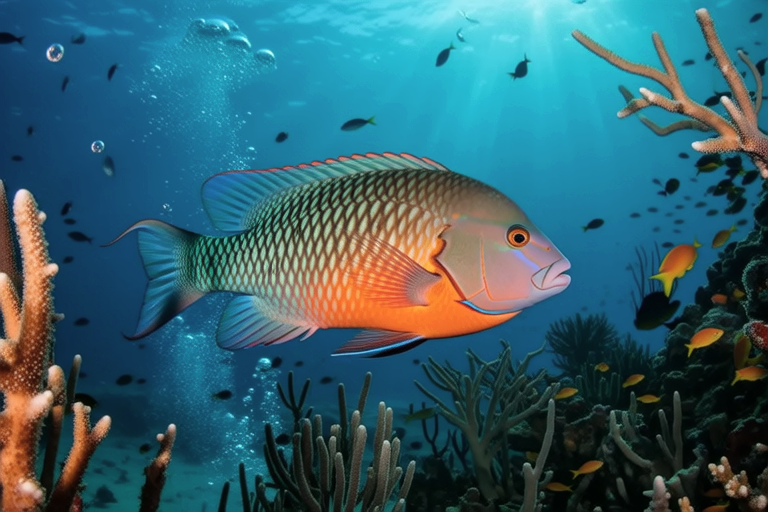
The Vibrant Underwater World of Parrot Fish
Parrot fish, a diverse group of marine species belonging to the family Scaridae, inhabit tropical and subtropical waters around the globe. These fascinating creatures are renowned for their striking colors and intricate patterns, which play crucial roles in their survival and reproduction. This article delves into the vibrant underwater world of parrot fish, exploring their unique colorations and the purposes they serve.
Coloration for Camouflage, Communication, and Attraction
Parrot fish exhibit an array of colors and patterns that serve various functions. Their vivid hues and complex designs help them blend into their surroundings, communicate with other members of their species, and attract potential mates. The combination of blue, green, yellow, and red pigments creates an iridescent effect that dazzles the eye and serves multiple purposes.
Camouflage is a critical survival mechanism for parrot fish. By mimicking the colors and textures of their environment, they can avoid predators such as sharks, barracudas, and moray eels. The intricate patterns on their scales also aid in breaking up their outline, making it harder for predators to spot them. For instance, the Scarus guacamaia, commonly known as the queen parrotfish, has a mottled brown and white pattern that allows it to blend seamlessly into coral reefs.
Communication within parrot fish communities is facilitated by color changes and displays. During social interactions, these fish may alter their coloration to signal aggression, submission, or readiness to mate. Males, in particular, use vibrant colors to establish dominance and attract females. The Chlorurus sordidus, or brown surgeonfish, demonstrates this behavior through its striking yellow and black stripes, which become more pronounced during courtship rituals.
Attracting mates is another vital function of parrot fish’s vibrant coloration. Males often display their brightest hues during breeding season to impress potential partners. The Scarus psittacus, or redband parrotfish, showcases its namesake red band during mating displays, while the Scarus coelestinus, or blue-green parrotfish, exhibits an electric blue underbelly to entice females.
Unique Species and Their Color Adaptations
Each species of parrot fish boasts distinct color adaptations tailored to their specific habitats and behaviors. For example, the Scarus psittacus is found in the Western Atlantic Ocean and features a bright red band running along its body, which becomes more intense during mating season. In contrast, the Scarus rubroviolaceus, or purplestripe parrotfish, inhabits the Indo-Pacific region and displays a striking combination of purple, pink, and orange hues.
The Scarus guacamaia is one of the largest parrot fish species, growing up to 1.3 meters in length. Its mottled brown and white pattern provides excellent camouflage among the coral reefs it calls home. The Scarus psittacus and Scarus coelestinus both inhabit the Caribbean Sea, where their bright colors stand out against the blue waters and sandy bottoms.
The Science Behind Vivid Hues
The vivid hues of parrot fish result from a combination of factors, including specialized cells and dietary influences. Chromatophores, light-sensitive cells embedded in the skin, allow these fish to change color rapidly. These cells contain pigments that reflect or absorb different wavelengths of light, creating the vibrant colors we observe.
Diet plays a significant role in determining the colors of parrot fish. Their diet consists primarily of algae and small invertebrates, which provide essential nutrients like carotenoids. Carotenoids are pigments that give fruits and vegetables their characteristic colors and are responsible for the red, orange, and yellow hues seen in many parrot fish species. A diet rich in carotenoids can lead to brighter and more vibrant coloration, enhancing the fish’s ability to attract mates and communicate with others.
Inspiration for Art, Design, and Conservation
The dazzling colors of parrot fish have inspired artists, designers, and conservationists alike. Many artists draw inspiration from the intricate patterns and vibrant hues of these fish, incorporating their designs into paintings, sculptures, and digital media. Fashion designers have also embraced the parrot fish’s color palette, using it to create bold and eye-catching clothing lines.
Conservationists use the captivating beauty of parrot fish to raise awareness about the importance of preserving marine ecosystems. By highlighting the unique colorations of these fish, they emphasize the need for sustainable fishing practices and marine protected areas. Educational campaigns often feature images of parrot fish to engage the public and encourage support for conservation efforts.
The Importance of Protecting Marine Ecosystems
Protecting marine ecosystems is crucial for preserving the colorful biodiversity of parrot fish and countless other species. Human activities, such as overfishing, pollution, and habitat destruction, threaten the delicate balance of these ecosystems. By implementing sustainable fishing practices, reducing pollution, and establishing marine protected areas, we can ensure the continued existence of these vibrant creatures.
Efforts to protect marine ecosystems benefit not only parrot fish but also the entire food web. Coral reefs, mangrove forests, and seagrass beds provide essential habitats for numerous species, including parrot fish. Conserving these ecosystems helps maintain healthy populations of these fish and ensures the continued diversity of colors and patterns in the ocean.
In conclusion, the vibrant underwater world of parrot fish offers a mesmerizing glimpse into the wonders of marine life. Their striking colors and patterns serve multiple purposes, from camouflage and communication to attracting mates. Unique species boast distinct color adaptations, and the science behind their vivid hues reveals the fascinating interplay between diet and specialized cells. Inspired by the beauty of parrot fish, artists, designers, and conservationists work together to promote awareness and protect marine ecosystems. By safeguarding these environments, we can preserve the colorful biodiversity of parrot fish and ensure their continued existence for generations to come.
