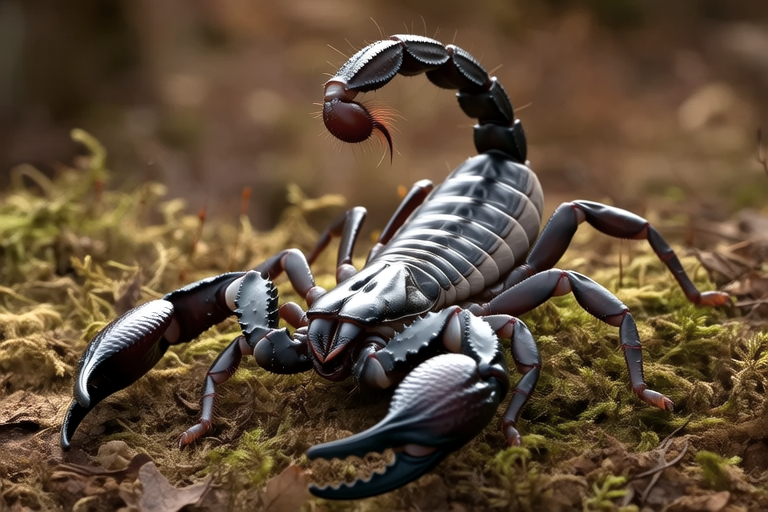
The Hairy Claws of Heterometrus Spinifer: A Journey into the World of the Exotic Scorpion
Imagine a creature that has been walking the Earth for over 400 million years, a survivor of prehistoric times, and yet, it remains one of the most misunderstood animals today. The Heterometrus spinifer, commonly known as the hairy scorpion, is such a creature. This scorpion, native to Southeast Asia, is renowned for its unique physical attributes, particularly its hairy claws, which are more than just a curious feature. These claws are intricately designed, serving multiple purposes that have been crucial to the survival of this ancient lineage. In this article, we will explore the unique characteristics and lesser-known facts about the hairy claws of Heterometrus spinifer, delving into their evolutionary advantages, their role in survival, dispelling myths, and understanding their contribution to behavior and interactions within their environment.
The Evolutionary Advantages of Hairy Claws
The hairy claws of Heterometrus spinifer are not merely decorative; they serve several significant evolutionary functions. The hairs, or setae, covering the claws are highly specialized sensory organs. Each hair can detect even the slightest changes in air pressure or vibrations, making them incredibly sensitive to their surroundings. This heightened sensitivity allows the scorpion to locate prey, avoid predators, and navigate its habitat with remarkable precision. The setae also play a crucial role in communication, allowing scorpions to convey messages through vibrations, much like Morse code, but at a microscopic level.
Evolutionarily speaking, the development of these sensory structures has provided the Heterometrus spinifer with a competitive edge. In environments where visibility is limited, such as dense underbrush or during nighttime foraging, the ability to sense vibrations becomes invaluable. This adaptation has likely contributed to the longevity of the species, ensuring its survival through numerous environmental changes and challenges.
The Role of Hairy Claws in Survival
The primary role of the hairy claws in the survival of the Heterometrus spinifer is multifaceted. Firstly, these claws are formidable weapons. Equipped with sharp pincers and venom glands, they are used to subdue prey. The venom, while not typically lethal to humans, is potent enough to immobilize small creatures such as insects and spiders. The claws’ strength lies in their ability to grip and crush prey, ensuring a steady food supply for the scorpion.
Secondly, the claws act as defensive tools. When threatened, the scorpion can use its claws to ward off potential predators. The size and appearance of the claws can be intimidating to many would-be attackers, providing a first line of defense. Additionally, the claws can deliver a painful pinch, deterring further aggression. This dual functionality—offensive and defensive—highlights the importance of these appendages in the daily life of the Heterometrus spinifer.
Myths Versus Reality
There are numerous myths surrounding scorpions, especially those with distinctive features like the hairy claws of the Heterometrus spinifer. One common misconception is that all scorpions are deadly. While it is true that some species possess venom potent enough to cause severe harm or death to humans, the Heterometrus spinifer is not among them. The venom of this species is primarily used to subdue prey and is not dangerous to humans unless there is an allergic reaction.
Another myth is that scorpions glow under ultraviolet light because they are radioactive. In reality, the fluorescence is due to a chemical reaction in their exoskeletons, not radioactivity. This glow serves as a natural defense mechanism, making the scorpion more visible to potential predators, thus deterring them from attacking. Interestingly, the hairy claws do not fluoresce under UV light, indicating that this particular feature does not play a role in this defense mechanism.
Behavior and Interaction Within the Environment
The behavior of the Heterometrus spinifer is closely tied to its physical adaptations, including its hairy claws. These scorpions are primarily nocturnal, emerging at night to hunt and forage. Their claws assist in digging burrows, which provide shelter during the day and serve as ambush points for unsuspecting prey. The sensitivity of the setae helps the scorpion detect approaching prey, allowing it to strike swiftly and efficiently.
Interactions between individuals of the same species are also influenced by the claws. During mating season, males engage in complex courtship rituals involving claw displays and vibrations. These behaviors are thought to communicate readiness to mate and establish dominance. After mating, the female uses her claws to protect her eggs and newly hatched young until they are capable of fending for themselves.
In terms of social behavior, scorpions are generally solitary creatures, only coming together for mating. However, the presence of other scorpions in the vicinity can trigger territorial disputes. The hairy claws are used in these confrontations to assert dominance, often resulting in a standoff rather than physical combat. This reduces the risk of injury to both parties and ensures the survival of the species.
Scientific Insights
Recent scientific studies have shed light on the intricate mechanisms behind the functionality of the hairy claws. Researchers have discovered that the setae on the claws are not uniformly distributed but form specific patterns that enhance their sensory capabilities. These patterns allow the scorpion to differentiate between various stimuli, improving its ability to respond appropriately to its environment.
Moreover, genetic analysis has revealed that the genes responsible for the development of these sensory structures are conserved across different species of scorpions. This suggests that the evolution of these traits occurred early in the lineage and has been maintained due to their significant adaptive value.
Conclusion
The hairy claws of the Heterometrus spinifer are not just fascinating physical features but are integral to the survival and behavior of this ancient species. From their role in hunting and defense to their importance in communication and reproduction, these claws exemplify the remarkable adaptability of nature. By understanding these unique characteristics, we gain insight into the complex world of scorpions and appreciate the intricate balance of life in their environment. As we continue to study these creatures, we uncover new layers of complexity, reminding us of the endless wonders that exist in the natural world.
