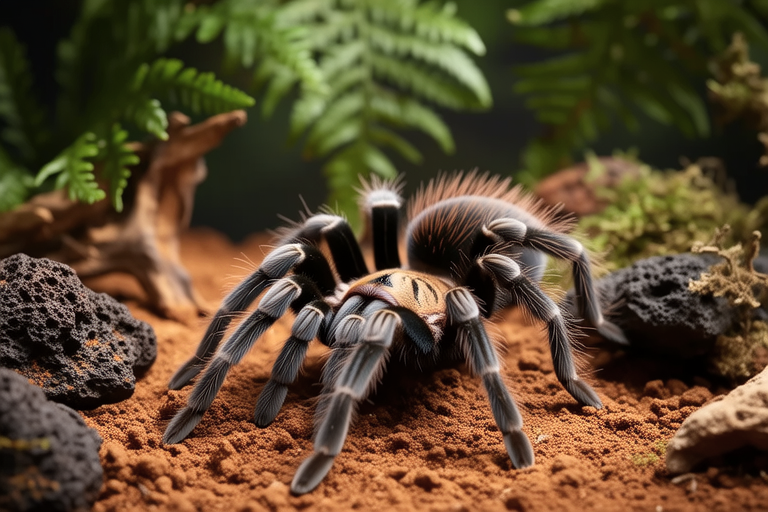
Creating the Ideal Habitat for a Chilean Rose Tarantula
The Chilean Rose Tarantula (Grammostola rosea) is a popular choice among tarantula enthusiasts due to its docile nature and striking appearance. However, providing the right environment for your pet is crucial to ensure its health and happiness. This guide will walk you through setting up the perfect habitat for your Chilean Rose Tarantula, covering enclosure size, substrate options, temperature and humidity requirements, hiding spots, lighting needs, and dietary considerations.
Enclosure Size
Adequate space is essential for your tarantula’s comfort and well-being. A general rule of thumb is to provide at least five times the leg span of the tarantula in height and three times in width. For an adult Chilean Rose Tarantula, which typically reaches about 5 inches (13 cm) in leg span, a 10-gallon tank or equivalent enclosure is sufficient. Larger enclosures are better, especially if you plan to keep multiple tarantulas or need more room for decorations.
Substrate Options
Selecting the right substrate is vital as it affects your tarantula’s burrowing behavior and overall health. Opt for a substrate that retains moisture but still allows for good drainage. Popular choices include coconut fiber, cypress mulch, and peat moss. Avoid substrates that can cause respiratory issues, such as cedar shavings. Aim for a depth of 4 to 6 inches (10 to 15 cm) to allow for burrowing.
Temperature and Humidity Requirements
Mimicking the natural environment of the Chilean Rose Tarantula is key to its health. These tarantulas thrive in temperatures between 75°F and 85°F (24°C to 29°C). Use a thermometer to monitor the temperature within the enclosure and adjust heating sources as needed. Maintain humidity levels around 50% to 70%. This can be achieved by misting the substrate occasionally or placing a water dish in the enclosure.
Hiding Spots
Chilean Rose Tarantulas are nocturnal and prefer dark, secluded areas. Providing multiple hiding spots will encourage natural behaviors and reduce stress. Suitable hiding spots include cork bark tubes, half logs, and commercially available caves. Place these items in different parts of the enclosure to give your tarantula options.
Lighting Needs
Chilean Rose Tarantulas do not require UVB lighting. However, they benefit from a day-night cycle to maintain their circadian rhythms. Position a low-wattage red bulb outside the enclosure if you wish to observe your tarantula at night without disturbing it. Alternatively, use a timer to turn off the lights at night and simulate a natural day-night cycle.
