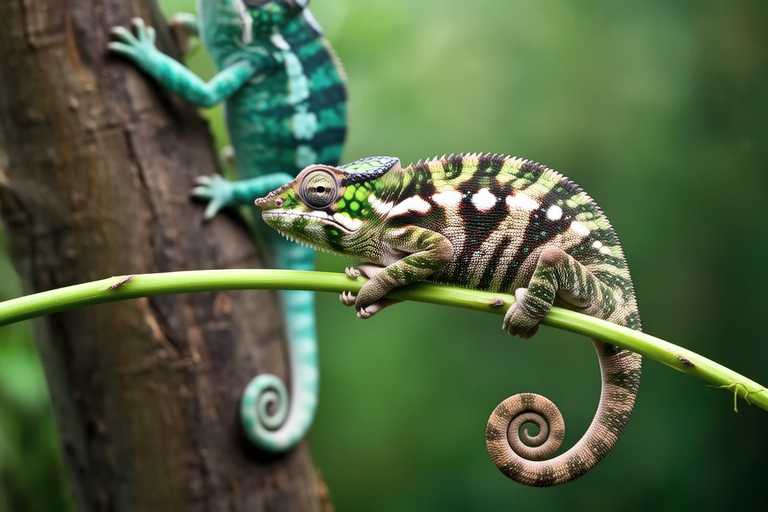
From Tiny Hatchlings to Majestic Adults: The Incredible Journey of Chameleons
The world of chameleons is a fascinating one, filled with incredible transformations and adaptations. From their humble beginnings as tiny hatchlings, these creatures undergo a remarkable journey that culminates in their development into majestic adults. This article delves into the unique characteristics of chameleon hatchlings, their rapid physical transformations, and the challenges they face along the way. We will explore how these resilient reptiles master their surroundings, becoming the distinct and specialized beings we know today.
Unique Characteristics of Chameleon Hatchlings
Chameleon hatchlings are born incredibly small, often measuring just a few centimeters in length. Their size is one of their most striking features, as it makes them highly vulnerable to predators. Despite this vulnerability, they possess a remarkable set of survival instincts from birth. One of the most notable is their ability to camouflage themselves almost immediately. Their coloration at this stage is usually dull, blending well with the leaf litter and vegetation around them, providing crucial protection from potential threats.
These hatchlings also have fully developed eyes, which are already capable of independent movement. This feature allows them to scan their environment for food and danger without moving their heads, giving them a significant advantage in their early days. Additionally, their tongues are proportionally much longer than those of adult chameleons, allowing them to capture prey effectively despite their diminutive size.
Rapid Physical Transformations
As chameleons grow, their bodies undergo rapid transformations, adapting to their environment in various ways. One of the most noticeable changes is in their diet. Initially, hatchlings feed on tiny insects like fruit flies and aphids. As they grow, their diet expands to include larger insects such as crickets and locusts. This dietary shift reflects their increasing ability to hunt and consume more substantial prey.
Behaviorally, young chameleons become more active and agile as they mature. They learn to navigate their habitat efficiently, using their prehensile tails for balance and support. Their skin coloration becomes more vibrant and dynamic, allowing them to communicate and regulate their body temperature more effectively. This adaptation is crucial for their survival, as it helps them blend into their environment when necessary and attract mates later in life.
Challenges During Developmental Stages
The journey from hatchling to adult is fraught with challenges. One of the primary obstacles is finding enough food to sustain growth. In the wild, chameleon hatchlings must compete with other insectivores for limited resources. This competition can be fierce, and only the fittest survive. Another challenge is avoiding predators, which includes birds, snakes, and even larger chameleons.
During the juvenile phase, chameleons face the task of establishing territories. This involves asserting dominance over other juveniles and defending their chosen space from intruders. These interactions are crucial for their social development and help prepare them for adulthood. Each challenge faced during these stages plays a role in shaping their behaviors and physical traits, contributing to their eventual success as adults.
Adaptations and Specializations
As chameleons reach adulthood, they exhibit several specialized features that make them uniquely adapted to their environments. Perhaps the most iconic of these is their tongue, which can extend up to twice the length of their body. This adaptation allows them to catch prey from considerable distances, ensuring a steady food supply. Their eyes, capable of rotating independently, provide a 360-degree field of vision, enhancing their hunting capabilities and situational awareness.
Adult chameleons are also renowned for their vibrant colors and intricate patterns. These features serve multiple purposes, including communication, temperature regulation, and camouflage. Males, in particular, display vivid hues during mating displays, signaling their fitness to potential mates. Females, on the other hand, use color changes to indicate receptivity or aggression. Additionally, chameleons can change their skin texture, creating a bumpy surface that disrupts light and helps them blend into their surroundings.
Conclusion: A Fascinating Journey
The journey from tiny hatchlings to majestic adults is a testament to the resilience and complexity of chameleon life cycles. Through their rapid physical transformations and the challenges they face, these reptiles demonstrate remarkable adaptability and determination. Their ability to master their surroundings, from initial camouflage to sophisticated hunting techniques, showcases the intricate balance of nature.
Understanding the life cycle of chameleons provides valuable insights into the broader world of wildlife and the delicate ecosystems they inhabit. It underscores the importance of conservation efforts aimed at protecting these remarkable creatures and their habitats. By appreciating the journey of chameleons, we gain a deeper respect for the natural world and its incredible diversity.
