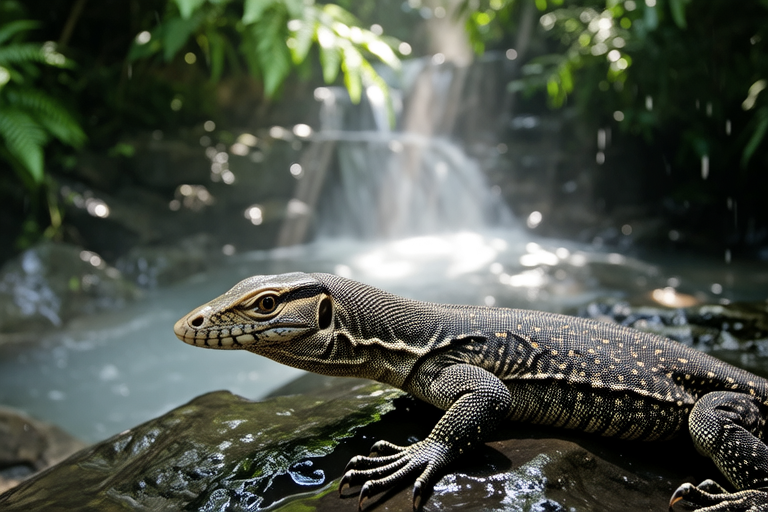
Fact vs Fiction: Understanding Water Monitors
Water monitors (Varanus salvator) have long been subjects of fascination and fear, often portrayed as aggressive, massive reptiles in popular culture. These misconceptions can lead to unnecessary fear and misunderstanding. Accurate knowledge is crucial for appreciating these remarkable creatures and ensuring their survival. This article delves into the distinctions between fact and fiction surrounding water monitors, providing a comprehensive overview of their biology, behavior, and ecological roles.
Physical Characteristics
Water monitors are among the largest lizards in the world, reaching lengths of up to three meters. Their bodies are elongated with powerful limbs, sharp claws, and a muscular tail that serves multiple functions. The scales are rough and keeled, providing protection from predators. Their tongues, forked like snakes’, are used for chemoreception, aiding in prey detection. Coloration varies widely, from brownish-black to yellowish-green, depending on their environment.
Habitat and Diet
These lizards inhabit diverse environments across Southeast Asia, from mangrove swamps to freshwater rivers and lakes. They are highly adaptable, thriving in both terrestrial and aquatic settings. Water monitors are opportunistic feeders, consuming a wide variety of prey, including fish, insects, small mammals, birds, and even carrion. Their diet reflects their versatile nature, contributing to their ecological significance.
Behavior
Water monitors are diurnal, active during the day, and spend much of their time basking in the sun. They are excellent climbers and swimmers, using their tails for propulsion in water. Males are territorial, engaging in combat during breeding season. Females lay eggs in nests dug into the ground, typically under cover. Hatchlings are independent from birth, requiring no parental care.
Myths vs Facts
Aggression
One prevalent myth is that water monitors are inherently aggressive towards humans. While they can be defensive when threatened, most interactions occur without incident. Aggression is usually reserved for encounters where they feel cornered or provoked. In reality, water monitors prefer to avoid conflict, retreating when possible.
Size
Another misconception is their uniform size. Although capable of growing large, many water monitors remain smaller due to environmental factors. The largest specimens are found in areas with abundant food resources and minimal human interference. Size variation underscores the adaptability of this species.
Intelligence
Water monitors are intelligent, displaying problem-solving abilities and learning behaviors. Observations suggest they can recognize individual humans, distinguishing between threatening and non-threatening interactions. Intelligence plays a significant role in their survival, enabling them to adapt to changing environments and threats.
Ecosystem Role
Water monitors play a vital role in their ecosystems, controlling populations of various prey species. By consuming carrion, they also aid in nutrient cycling. Their presence indicates a healthy ecosystem, serving as indicators of environmental health. Protecting water monitors indirectly benefits other wildlife and maintains ecological balance.
Conservation Status
Despite their widespread distribution, water monitors face threats from habitat loss, hunting, and the exotic pet trade. Overharvesting for their skin and meat has led to localized declines. Conservation efforts focus on protecting habitats and raising awareness about sustainable practices. Collaboration between governments, NGOs, and local communities is essential for effective conservation.
Tips for Responsible Observation
If you encounter a water monitor, observe from a safe distance. Do not attempt to handle or provoke it. Respect its space and allow it to move freely. Educate others about the importance of these animals and encourage responsible behavior. Reporting sightings to local authorities or conservation groups can contribute valuable data for research and monitoring.
Conclusion
Accurate information about water monitors is essential for fostering respect and proper care for these magnificent creatures. By dispelling myths and focusing on verified facts, we can promote understanding and appreciation. This knowledge encourages responsible interaction and supports conservation efforts. Let us strive to protect water monitors and the ecosystems they inhabit, ensuring their continued existence for future generations.
